OFARM SENDS LETTER TO UNDER SECRETARIES HOSKINS, HUTCHINS and FORDYCE
Dear Under Secretaries Hoskins, Hutchins, and Fordyce:
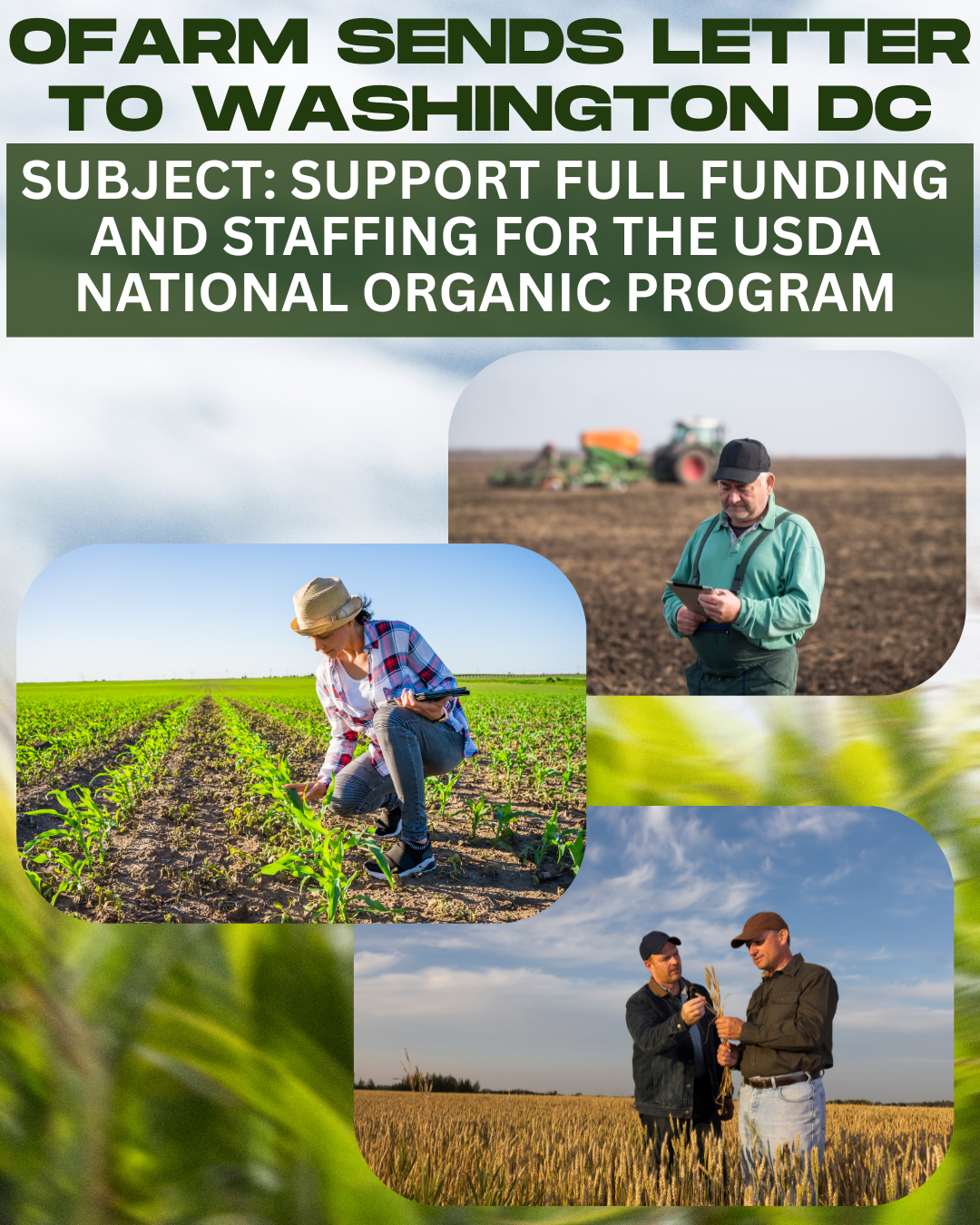
On behalf of the Organic Farmers' Agency for Relationship Marketing, Inc. (OFARM), I am writing to respectfully urge USDA to act quickly on several issues that directly affect the success or failure of family-owned organic farms.
OFARM is a farmer-led organization representing organic grain producers and cooperative marketing organizations across several states. Our members are not asking USDA to create a special market for us. We are asking USDA to protect the market that organic farmers have built through years of certification, recordkeeping, conservation, investment, risk, and commitment to the integrity of the USDA organic seal.
For an organic family farming operation, the organic seal is not just a label. It is the foundation of the business. It affects the seed we buy, the rotations we plan, the fertility sources we use, the equipment we need, the paperwork we keep, the buyers we can access, and the prices we must receive to keep farming. When organic enforcement is weak, when questionable imports enter the market, when certification costs rise without promised support, or when organic research is delayed, the impact is not theoretical. It shows up directly at the farm gate. It shows up whether a family can make a land payment, keep the next generation involved, hire help, or stay certified at all.
At the Spring National Organic Standards Board meeting in Omaha, I was present and delivered OFARM's verbal testimony. OFARM emphasized that organic grain farmers are facing serious pressure from unstable markets, questionable imports, lack of price transparency, and uneven enforcement. Those concerns remain urgent.
Organic demand in the United States continues to grow, but domestic organic farms are not sharing fairly in that growth. In too many cases, U.S. organic family farms are being asked to compete against imported products that may not be held to the same level of scrutiny. When questionable grain enters the market and depresses prices, the damage lands directly on farmers who followed the rules. One load of fraudulent organic grain does not just affect one transaction. It can weaken an entire regional market and reduce confidence for honest farmers, handlers, buyers, and consumers.
We appreciate USDA's work to strengthen organic enforcement, including electronic organic import certificates and improved traceability tools. However, those tools only work if the National Organic Program has enough trained staff to enforce the rules. OFARM remains concerned whether the National Organic Program has adequate staffing and resources in the areas of accreditation, compliance, trade oversight, enforcement, and technology systems. These are not merely administrative functions to farmers. They are the guardrails that keep the organic marketplace honest.
We respectfully urge USDA to restore, maintain, and protect adequate staffing within the National Organic Program, with particular attention to enforcement, accreditation, trade activities, and Organic INTEGRITY systems. We also urge USDA to designate key NOP personnel as essential workers during any government shutdown or lapse in appropriations, specifically for the purpose of continuing organic enforcement, trade oversight, accreditation, and compliance activities. Organic farmers should not be left unprotected during a shutdown. Our crops keep moving, markets keep reacting, and fraud does not wait for the federal government to reopen.
We also urge USDA to protect the role and function of the National Organic Standards Board. The NOSB is one of the few places where farmers, handlers, certifiers, environmental representatives, scientists, retailers, and consumers meet in public to evaluate organic standards. That public process matters. It gives organic farmers confidence that changes to the standards are not being made behind closed doors or without full consideration of how those decisions affect real farms.
Organic farmers depend on clear, consistent, and enforceable standards. If the NOSB cannot meet, cannot complete materials reviews, or cannot provide timely recommendations, the whole organic system becomes less predictable. That uncertainty creates risk for family farms already operating on thin margins.
Research is another urgent need. Organic farmers face unique production challenges, including weed control, fertility management, crop rotations, soil health, livestock integration, pest management, and climate variability. These are not fringe issues. They are the day-to-day realities of organic production. Yet organic research has historically received only a small share of public agricultural research investment.
Delays or disruptions in organic research funding harm farmers directly. When research projects are delayed, reduced, or lost, farmers lose practical tools they need to improve yields, manage weeds, reduce risk, and stay competitive with imports. For organic grain farmers, research into weed control, soil fertility, crop rotations, cover crops, biological systems, and regionally adapted practices is essential.
We urge USDA to fully and consistently support organic research, including the Organic Agriculture Research and Extension Initiative and related organic research programs across USDA agencies such as ARS, NIFA, ERS, and NASS. Organic farmers need research that is practical, regional, and usable on working farms.
We also urge USDA to promptly restore Organic Certification Cost Share Program funding at the full authorized reimbursement level and to avoid further delays or uncertainty in future program years. Certification is necessary to participate in the organic market, but certification costs continue to rise. For small and mid-sized family farms, cost share is one of the most direct ways USDA can reduce barriers to staying certified. When cost share funding is delayed or uncertain, farmers carry the full cost themselves. That may seem small from Washington, but on a family farm, every added cost matters.
Finally, OFARM asks USDA to provide meaningful organic training for FSA, NRCS, RMA, and other relevant USDA staff. Many county and state-level USDA employees work hard to serve farmers, but organic systems are different. Organic farmers often receive inconsistent guidance because local staff are unfamiliar with organic certification rules, organic crop rotations, organic livestock requirements, or the practical realities of organic weed and fertility management. That knowledge gap can prevent organic farmers from accessing programs that were intended to help them.
Organic family farms are not asking USDA to guarantee success. Farming will always involve risk. But we are asking USDA to make sure the rules are enforced, the research is funded, the cost-share commitments are honored, and USDA staff are equipped to serve organic farmers fairly.
The future of organic agriculture should not depend on whether family farms can survive weak enforcement, delayed programs, and unfair competition. If USDA wants domestic organic production to grow, it must protect the farmers already doing the work.
We respectfully request your attention to these issues and would welcome the opportunity to correspond with each of you to discuss how USDA can better support domestic organic family farms and the integrity of the organic marketplace.
Respectfully,
Stephen Boyda, President
Organic Farmers' Agency for Relationship Marketing, Inc.
OFARM Email: Marketing@OFARM.org
On behalf of the Organic Farmers Agency for Relationship Marketing, OFARM, we are writing to urge Congress to fully fund and fully staff the USDA National Organic Program.
OFARM represents organic farmer-driven cooperatives and aligned organizations working to support domestic organic producers, strengthen organic markets, protect organic integrity, and preserve consumer confidence in the USDA organic seal.
The National Organic Program is not a minor administrative office. It is the federal program responsible for developing, maintaining, and enforcing the standards behind the USDA organic label. That label carries real value for consumers, farmers, processors, handlers, certifiers, and the broader organic marketplace.
According to USDA's FY 2027 Budget Summary, the National Organic Program is funded at $23 million, maintaining the same level as FY 2026. At the same time, the Organic Trade Association reports that U.S. organic sales reached $76.6 billion in 2025. That means a relatively small federal program is responsible for protecting the integrity of a large and growing marketplace.
That responsibility has only increased with implementation of the Strengthening Organic Enforcement rule. USDA states that this rule was designed to strengthen oversight and enforcement of organic production, handling, and sales; improve farm-to-market traceability; strengthen organic control systems; and provide more robust enforcement of USDA organic regulations.
Those goals cannot be met without adequate staffing.
Organic farmers support strong enforcement because we depend on a level playing field. We invest years building certified organic systems. We follow detailed production, handling, recordkeeping, inspection, and certification requirements. We accept the costs and responsibilities that come with organic certification because the USDA organic seal is supposed to mean something.
When enforcement is weakened, honest organic farmers are harmed first.
Reports from organic policy organizations indicate the National Organic Program has already lost roughly one-third of its staff over the past year. That should concern every member of Congress who values fair markets, consumer trust, and domestic agricultural production. A smaller and strained NOP increases the risk of delayed enforcement, reduced oversight of certifiers, weaker import monitoring, slower response to complaints, and greater opportunity for fraud within complex supply chains.
This is especially important for organic grain producers. Organic grain markets have already faced serious challenges from questionable imports, fraudulent representation, and inconsistent supply chain accountability.
Every bushel falsely represented as organic directly competes against family farm operations that are following the rules.
The Strengthening Organic Enforcement rule was a needed step forward, but a strong rule without the staff to enforce it is only a promise on paper.
The implementation of the Strengthening Organic Enforcement rule marked a significant advancement in safeguarding the integrity of organic agriculture. However, the effectiveness of this rule depends entirely on the ability to enforce it. Without sufficient staffing and resources dedicated to oversight, even the strongest regulations remain unenforced promises rather than practical protection for farmers and consumers. Ensuring that enforcement is robust and adequately supported is essential to fulfill the intent of the rule and maintain trust in the USDA organic seal.
For that reason, OFARM respectfully urges Congress to:
• Fully fund the USDA National Organic Program at a level adequate to carry out its statutory responsibilities.
• Direct USDA to restore, maintain, and protect sufficient staffing within the National Organic Program.
• Ensure NOP has the personnel and resources needed to oversee accredited certifiers, investigate complaints, monitor imports, enforce organic regulations, and fully implement the Strengthening Organic Enforcement rule.
• Reject reductions, hiring freezes, or administrative actions that would weaken organic oversight or delay enforcement.
• Provide clear Congressional direction that protection of organic integrity is a priority for USDA.
The organic seal is only as strong as the enforcement behind it. Farmers cannot be asked to follow the rules while fraud and shortcutting are allowed to gain ground because the federal program responsible for oversight lacks the staff and resources to act.
Congress has a responsibility to protect the integrity of the organic marketplace it helped create. Fully funding and fully staffing the National Organic Program is one of the most direct ways to protect honest farmers, safeguard consumers, and maintain confidence in American organic agriculture.
OFARM stands ready to work with Congress, USDA, and other organic stakeholders to ensure that the National Organic Program has the resources necessary to protect honest producers, maintain consumer confidence, and defend the value of the USDA organic seal.
Respectfully,
Stephen Boyda
President
Organic Farmers Agency for Relationship Marketing, OFARM
Certified Organic Grain Producer, Kansas
OFARM members Steve Boyda, Will Ortman, Ed Reznicek and Carmen Fernholz featured in The Land Connection Winter Webinar Series “Cooperative Organic Grain Marketing: How Does Organic Grain Marketing Really Work. Listen here.
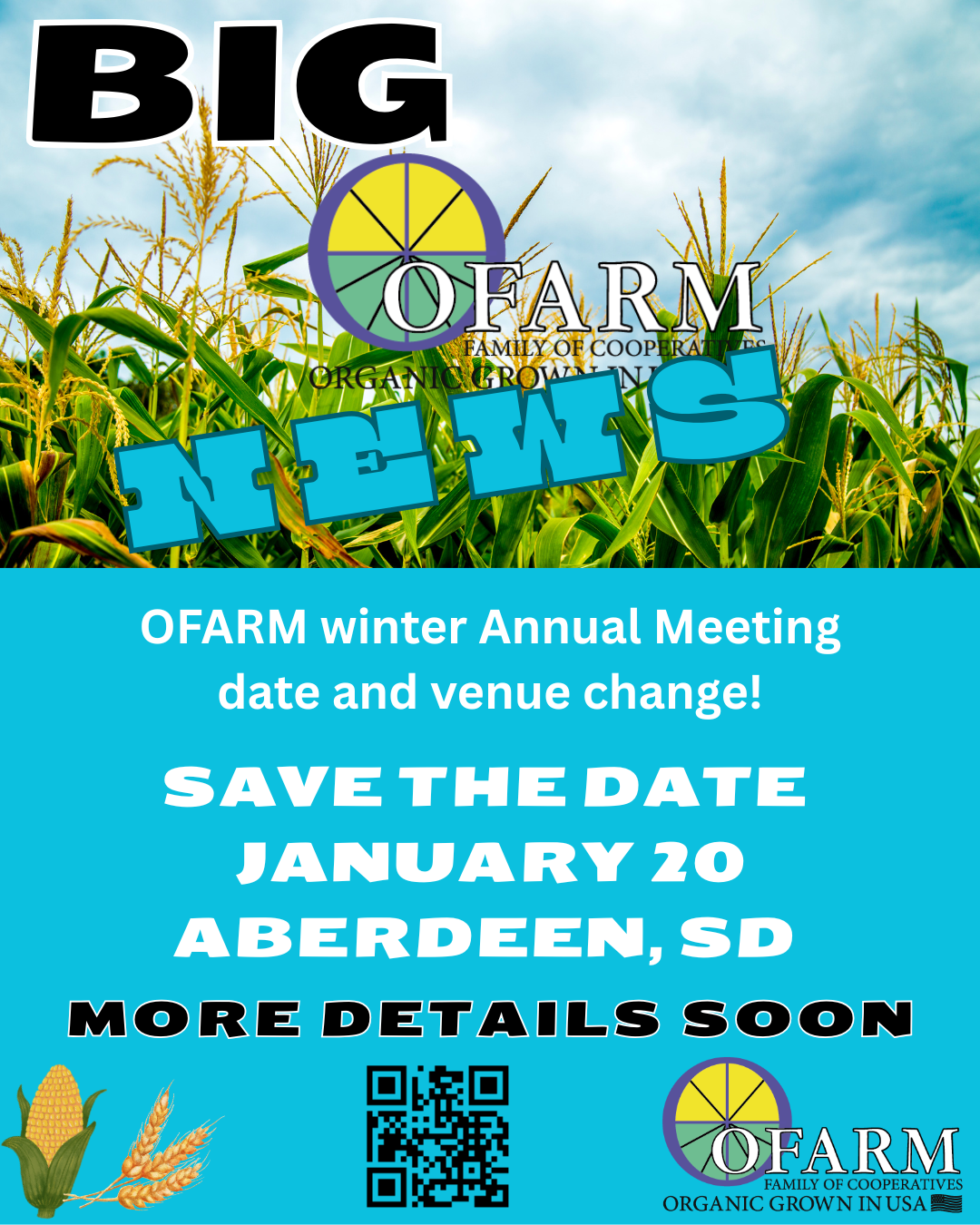
OFARM looks forward to connecting with organic farmers in the South Dakota area.
Make plans to attend, meet your Marketer, and discover more about OFARM and its partners.
January 20, 2026
MAHA roundtable news release, July, 2025
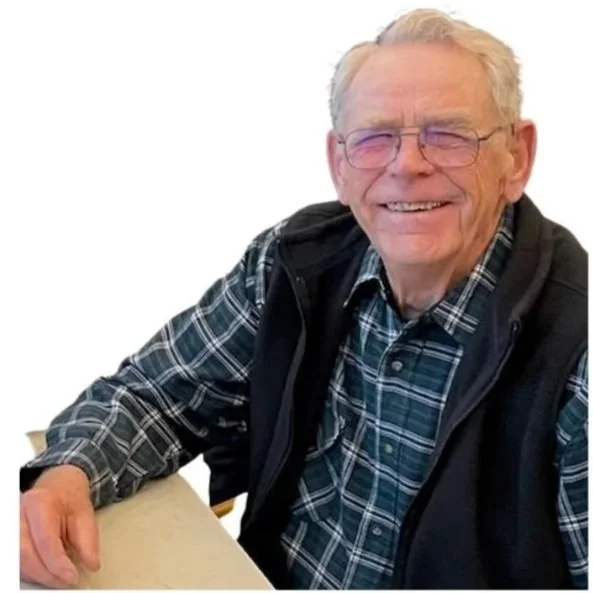
Oren Holle, OFARM Board Member, attended Washington, DC Make America Healthy Again Roundtable Discussion, July, 2025
MAHA roundtable news release, July, 2025
ORGANIC LEADERS PARTICIPATE IN A HISTORIC ROUNDTABLE CENTERED AROUND THE ADMINISTRATION MANTRA ‘MAKE AMERICA HEALTHY AGAIN’ (MAHA)
Fully on Board with this Trump Administration, initiative Senator Roger Marshall (R) Kansas convened this historic roundtable with invitations to various Ag industry leaders from fields of production, business, research, education, innovation, and investment. The central theme of the event was Healthy Soil – Healthy Crops – Healthy People.
Senator Marshall issued this press release:
“Today, on Capitol Hill, I was privileged to welcome Secretary Kennedy, Secretary Rollins, farmers, and agriculture experts from across the country for a roundtable targeted at the importance of soil health. Our farmers and ranchers are the backbone of the Make America Healthy Again movement; without their support and voices in our ears, this will not succeed.
As a fifth-generation Kansas farm kid and an OBGYN, I understand how important agriculture is and also how important nutritious foods are for a mother and her baby.
Soil health is where MAHA meets agriculture, and where we can foster healthy people and a healthier America.
Today, we were educated by our agriculture experts on the ways we can encourage better practices to improve the health of our soil.
It is my belief that we must work as one team to encourage public-private partnerships between farmers and the federal government and between the Trump Administration and Capitol Hill.
MAHA will not succeed without the cooperation and partnership of the people who are in this room.”
In addition to Senator Marshall’s comments, Secretary of Agriculture, Brooke Rollins indicated support for a healthy soil initiative, and Health and Human Services Secretary, Robert F. Kennedy Jr. stayed true to form in his support for the healthy soil element as a primary underlying factor in addressing our current health crisis.
The ‘experts’ included two bonified organic producers with a combined seventy years of organic production experience.
Bob Quinn, Big Sandy MT, a leading green businessman, offering leadership in the Real Organic Project, an acclaimed organic industry leader, and past National Organic Standards Board (NOSB) member, and Oren Holle, Bremen KS, a three decade organic producer, past President of Organic Farmers Agency for Relationship Marketing (OFARM) and Board Member of Central Plains Organic Farmers Association (CPOFA) were invited with the opportunity to champion the underlying Healthy Soil Principle of the organic industry.
In the participants’ opinion it was a great opportunity to include the perspective that organic farming is a viable part of the equation to address a growing concern for the continuing increase in chronic health issues.
Finally, this mantra has moved into the mainstream conversation; “Healthy soil produces healthy crops and results in healthy people.”
They reinforced the point that the organic production movement was born and grown based on the basic principle, healthy soil to produce healthy food.
In this landmark roundtable this was frequently repeated and reinforced.
Additional participating panelists included:
Dr. Chuck Rice, distinguished professor of microbiology at K-State, laid the ground work for the healthy soil element of the equation. In my opinion he made a fantastic case for the returning to the basics of organic farming as realistic solution to our depleting soil health epidemic.
Dr. Duriusch Mozaffarin, Tufts University Friedman School of Nutrition Science and Policy, Medford MA, very pointedly verified the connection of nutrition in our food to our long-term health.
Dr. Stanley Culpepper, Professor and Extension Agronomist in the Crop and Soil Science Department, University of Georgia, reiterated the need for more responsible use of pest control practices.
Blaine Gunther, founder of SureFire Ag, Atwood KS, and Lucas Koch, Kelly Hills Unmanned Systems/Heinen Bros Agra Services, Seneca KS, along with Ray Flickner, Innovation Farm, Moundridge KS, added the element of new and innovative technologies that have huge potential in reduction of the amount of chemicals needed for pest control.
Earl Roemer, Nu Life Markets championed his work in Grain Sorghum, as an alternative non-GMO and more drought tolerant crop alternative, while developing market alternatives as a gluten free food source.
Carter Williams, iSelect Fund, encouraged investments in accessible, scalable nutrition solutions, to improve public health.
Mr. Holle and Mr. Quinn presented some historical, commonsense perspective that crop production is possible without the high cost, and often proven, detrimental application of the host of new technologies that have been brought into the mainstream industrial model agriculture. Oren submitted the observation that, had our Ag Universities and Extension programs continued to pursue best practices to maintain healthy soils to produce healthy crops we could be better positioned with solutions to the ensuing health issue at hand. He also pointed out that the organic movement was born out of the need to address this agriculture production paradigm shift.
They, at least, used this opportunity to present the organic alternative as a viable piece of the solution to rebuild the emphasis on soil health as a basic premise to improving human health. They made the point that healthy, abundant food production is proven to be possible with a departure from the, often proven, detrimental applications of the current host of chemical products and often questionable and long-range failures of GMOs that accompany the process.
The panelists reminded the Ag Secretary that current Farm Bill and Government subsidized Crop Insurance policies continue to promote the maximizing of yield, in fence row to fence production, with an unbearable high cost of newly innovative technologies. These continue to become departures from addressing the need for a return to real-time soil health basics. Along with the phenomenal input cost, the continued overproduction of crops that the market cannot bear, or production of modified crops that our trading partners don’t even want, have caused the current dilemma of lost profitability opportunities and another round of loss of family farms.
In private conversation with Senator Marshall, they had the opportunity to thank the Senator for the current support for effective conservation practices in NRCS and pointed to the need for program support for organic farming practices. We still fall far short of a fair share of farm program funding compared to our share of the farm economy.
The organic community, needs to appreciate Sen. Marshall’s efforts to build the communication bridge between the HHS Secretary Kennedy and Ag Secretary Rollins in the Make America Great Again mantra.
On the other hand, it was disappointing that while gathering this Round Table discussion group, time was very limited when a day long symposium could have served to further explore ideas that could become part of a practical steps toward real change. If our participation was truly perceived as important then further dialog would appear to have been a positive step.
Oren added this observation. It was a personal disappointment, that while we had already cleared security, as soon as the meeting ended, we were promptly shooed out of ‘our’ capitol building. To me it would have seemed logical that we, at least, could have spent some time to experience and admire the grandiose architecture of this amazing pillar of our democracy, which the Senator’s aids would have been willing to accommodate. In order to have this opportunity to fully experience a capitol visit, we had to go to the visitor’s center and await our turn to join a tour group.
Given the Administration emphasis for the Make America Healthy Again initiative, and the attention of several cabinet positions, we can at least hold some hope that we may see, at least, some meaningful moves in a positive direction to address soil health issues. It is long overdue.
Oren Holle

OFARM’s Carmen Fernholz Honored with 2025 Siehl Prize for Excellence in Agriculture - Production
Bell Museum, Minnesota — May 28, 2025 — Carmen Fernholz, longtime organic farmer, agricultural thought leader, and current board member and past vice president of OFARM (Organic Farmers Agency for Relationship Marketing), has been awarded the prestigious 2025 Siehl Prize for Excellence in Agriculture in the category of Production Agriculture. The award ceremony, held at the University of Minnesota, at the historical Bell Museum, celebrated Fernholz’s decades-long commitment to sustainable farming, organic innovation, and building a more equitable food system.
The Siehl Prize, established through the generosity of philanthropist Eldon Siehl, honors those who dedicate their lives to feeding the world and fostering sustainable agricultural futures. The 2025 award was presented by University of Minnesota College of Food, Agricultural and Natural Resource Sciences Dean Brian Buhr and University of Minnesota Regent Doug Huebsch.
Carmen Fernholz’s acceptance speech eloquently captured his philosophy of farming as a life’s work rooted in joy, interdependence, and stewardship. Speaking with humility and depth, Fernholz reflected on the evolution of his career, shaped by the values of health, ecology, fairness, and care as defined by organic principles. He credited the land itself—and the relationships nurtured through it—as his most enduring teacher.
"For me," Fernholz said, "the dream is people again populating the prairies of western Minnesota … understanding that we create economic, social, and environmentally balanced opportunities here on the land." His remarks emphasized the need to move from independence to greater interdependence, highlighting the essential role of community, shared knowledge, and institutional trust in a resilient agricultural future.
A leader in the organic movement for more than four decades, Fernholz helped shape national dialogue around organic standards, regenerative practices, and farmer-led research. Through his work with OFARM, he advocated stronger market opportunities and collective action among organic producers.
“The story of my farming career is about the organic farmer and the weed scientist,” Fernholz shared, reflecting on his work with the late Dr. Don Wyse, co-founder of the Forever Green Initiative. “We were both farm boys and remained farm boys at heart. We just took different roads that ended up at the same place.” Dr. Don Wyse was also a recipient of the 2025 Siehl Prize in the Knowledge category. His wife, Beverly Wyse, accepted the award on his behalf
The 2025 Siehl Prize ceremony was not only a celebration of Fernholz’s achievements but also a tribute to the enduring power of passion, persistence, and place in shaping the future of agriculture.
